Sciatica: why pain radiates to the leg and how to restore mobility.
Sciatica is not a distinct disease in itself, but rather a complex of symptoms.
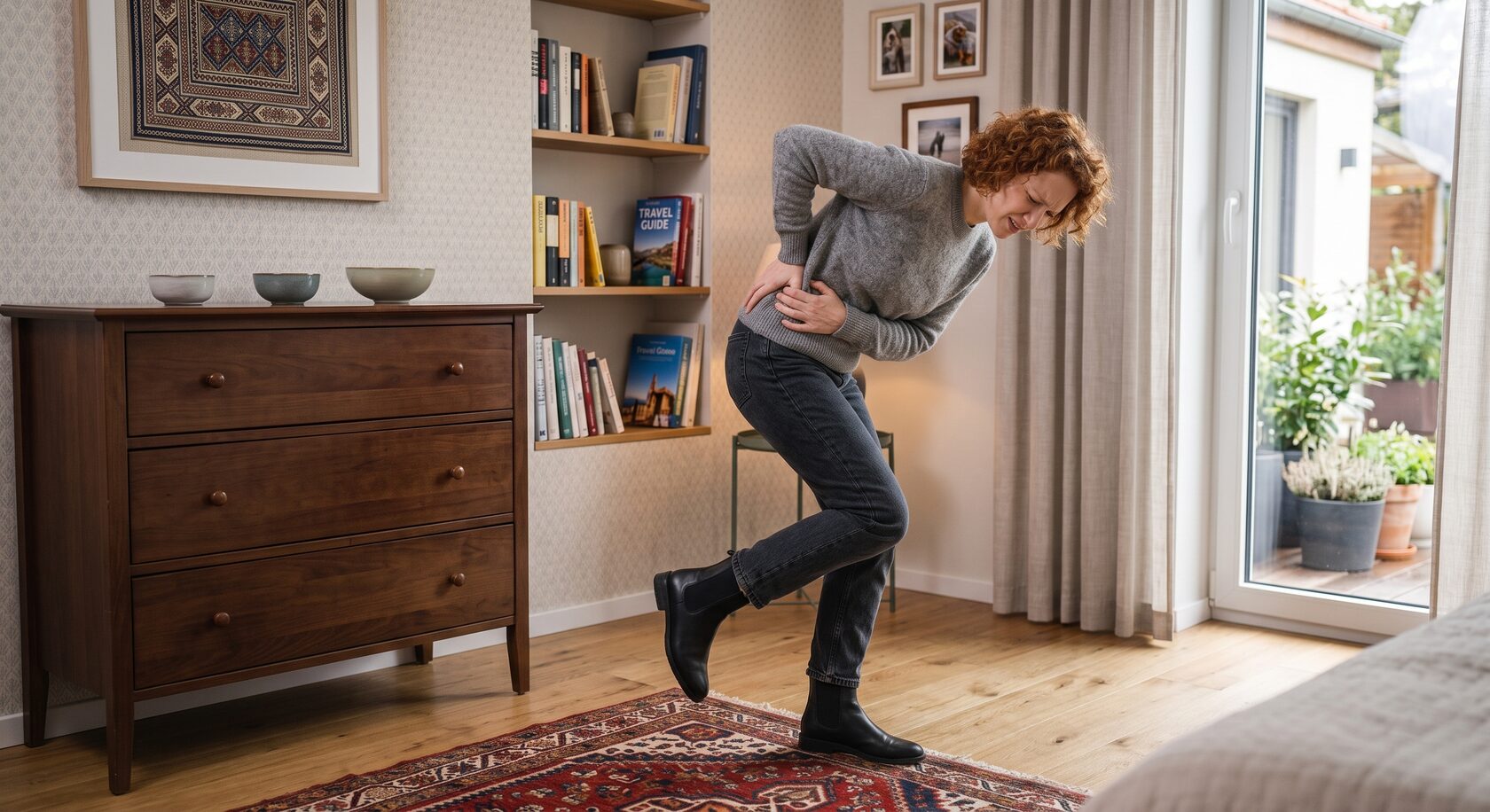
The pain begins in the lower back or buttock and then travels down the thigh and lower leg, sometimes reaching the foot. Symptoms may include a burning sensation, tingling, numbness, or weakness in the leg. These symptoms are often referred to as sciatica or "inflammation of the sciatic nerve."
Simply relieving pain at the site of discomfort is not enough; it is essential to determine why the functioning of the lower back, pelvis, and leg muscles has been compromised.
What is sciatica?
Sciatica is a condition involving irritation or compression of the sciatic nerve. The sciatic nerve is formed from nerve roots in the lumbosacral region and runs from the buttock area down the leg.
A herniated disc is not always the sole cause of these symptoms. A person's condition is also influenced by the function of the lower back and pelvic muscles, joint mobility, and the body's ability to handle daily physical loads.
Therefore, the phrase "inflammation of the sciatic nerve" oversimplifies the problem. It is necessary to assess the entire musculoskeletal system rather than attempting to treat only the nerve or the lower back.
How sciatica manifests
The primary sign of sciatica is pain radiating from the lower back or buttock into one leg.
The pain may be:
• shooting;
• burning;
• pulling;
• sharp;
• like an electric shock.
Concurrently, there may be tingling, numbness, reduced sensation, or muscle weakness in the leg. Sometimes the pain intensifies with prolonged sitting, bending, walking, or attempting to change body position.
If the pain is confined to the lower back and does not radiate to the leg, it is not necessarily sciatica. Why pain occurs
Sciatica can be linked to an intervertebral disc protrusion or herniation, spinal stenosis, the aftermath of an injury, or other spinal changes.
However, an imaging scan shows the spine's structure but does not fully explain why a person is experiencing pain. Disc protrusions and herniations are also found in people who have no pain at all.
During an examination, it is important to assess not only the MRI results but also the condition of the muscles in the:
• lower back;
• abdomen;
• gluteal region;
• pelvis;
• thighs;
• lower legs and feet.
Spasms in some muscles and weakness in others can impair movement coordination and increase the load on the painful area. For example, tension in the piriformis muscle (in the buttock) is sometimes accompanied by pain, tingling, and shooting sensations radiating down the leg.
Therefore, treatment should focus on the person rather than the scan, taking into account their symptoms, mobility, and response to physical activity.
Is an MRI necessary for sciatica?
An MRI is not required for every patient. Often, it is sufficient for the doctor to ask about symptoms and check muscle strength, sensation, reflexes, and the movements that trigger pain.
Additional testing may be needed if:
• the pain appeared after a serious injury;
• symptoms are rapidly worsening;
• significant muscle weakness develops;
• treatment is ineffective;
• the doctor suspects a condition requiring specialized intervention.
MRI results must be correlated with the clinical picture. A detected herniated disc is not always the sole cause of pain, and its size does not always correspond to the severity of symptoms.
Why you shouldn't just lie down with sciatica
When in pain, a person instinctively tries to move less. In the first few days, sensibly limiting particularly painful movements may be justified. However, prolonged bed rest leads to muscle weakness, stiffness, and a fear of physical activity. A vicious circle arises:
pain → restricted movement → muscle weakening → even lower tolerance for physical exertion.
Properly selected movement helps break this cycle. This does not mean exercising through sharp pain or following a random routine found online. The workload must match the individual's condition and be adjusted as recovery progresses.
How kinesiotherapy helps with sciatica
With sciatica, it is not enough to treat only the site of the pain. It is necessary to assess the function of the muscles in the lower back, pelvis, buttocks, and legs, identify the source of the dysfunction, and restore movement through a personalized exercise program.
Kinesiotherapy is rehabilitation through movement. The method is based not on a one-size-fits-all exercise routine, but on an individualized program created after functional and myofascial assessments.
During the initial consultation, the specialist evaluates:
• where the pain originates and where it radiates;
• which movements intensify or alleviate it;
• spinal and joint mobility;
• muscle strength and elasticity;
• movement coordination;
• the condition of the lower back, pelvic, and leg muscles;
• co-existing medical conditions and the patient's level of physical fitness.
Following the assessment, exercises are selected to restore impaired functions.
Initially, the goal is to teach the muscles to contract and relax fully, reduce excessive tension, and restore an accessible range of motion. Subsequently, the workload is gradually increased to strengthen muscles and improve endurance.
The purpose of Bubnovsky exercise machines
At the Dr. Bubnovsky Center, sessions include the use of multifunctional exercise machines. A system of pulleys...