Osteoporosis Symptoms in Women Over 50: How to Recognize the Problem Early
After the age of 50, a woman's body undergoes significant hormonal changes. The decline in estrogen levels during menopause affects not only overall well-being but also bone health. As a result, the risk of developing osteoporosis increases considerably.
Osteoporosis is often called a "silent disease" because it frequently progresses without noticeable symptoms in its early stages. Many women only discover they have osteoporosis after experiencing a fracture caused by a minor fall or even routine daily activities.
What Is Osteoporosis?
Osteoporosis is a chronic condition characterized by a decrease in bone density and deterioration of bone structure. As bones become weaker and more fragile, the risk of fractures increases.
Following menopause, bone loss accelerates significantly. During the first 5 to 10 years after menstruation stops, a woman may lose up to 20% of her bone mass, substantially increasing the risk of complications.
Common Symptoms of Osteoporosis in Women Over 50
1. Back Pain
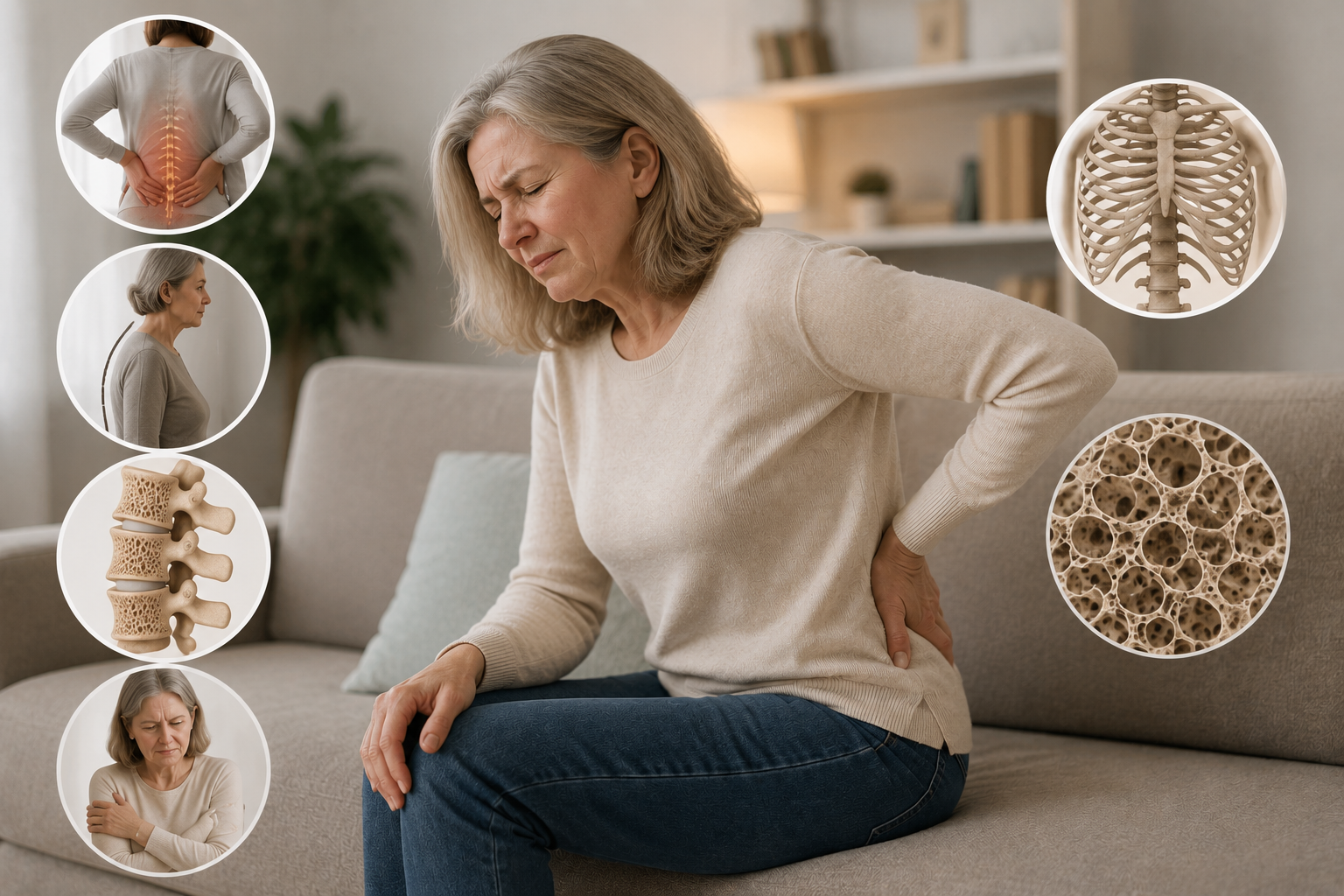
One of the earliest warning signs may be persistent back pain, particularly in the thoracic and lumbar spine. In some cases, the pain is caused by small compression fractures of the vertebrae that can occur during normal daily activities.
2. Loss of Height
A decrease in height of 2 to 4 centimeters or more over several years may indicate vertebral compression changes commonly associated with osteoporosis.
3. Postural Changes
Gradually, a woman may develop a rounded upper back, increased stooping, or what is commonly referred to as a "dowager's hump." These postural changes are often linked to vertebral deformation and weakening of the supporting muscles.
4. Increased Bone Fragility
Fractures of the wrist, hip, ribs, or vertebrae following a minor fall or everyday activity are among the most characteristic signs of osteoporosis.
5. Reduced Physical Activity
Because of pain, discomfort, or fear of injury, many women begin to move less. This can further weaken muscles and negatively affect the musculoskeletal system.
6. Muscle Weakness and Cramps
Deficiencies in calcium, vitamin D, and physical activity may contribute to muscle weakness, fatigue, and nighttime leg cramps.
Who Is at Higher Risk?
The likelihood of developing osteoporosis increases if one or more of the following factors are present:
Why Movement Is Especially Important After 50
Bone tissue is constantly being renewed. Maintaining bone strength requires regular and safe physical activity. When muscles work, blood circulation improves, metabolism becomes more efficient, and bone tissue receives better nourishment.
Without adequate movement, bone loss may accelerate. That is why modern osteoporosis prevention includes not only medical management but also individually tailored exercise programs.
The Role of Kinesitherapy in Osteoporosis Management
The Bubnovsky Center in Riga uses kinesitherapy — a method focused on restoring musculoskeletal function through specially selected exercises performed without excessive axial load on the spine and joints.
The Center specializes in the prevention, treatment, and rehabilitation of musculoskeletal disorders without surgery or medication.
Following a consultation with a physiotherapist and a functional assessment, an individualized exercise program is developed based on age, fitness level, and any accompanying health conditions.
This approach helps:
When Should You Consult a Specialist?
It is recommended to seek professional evaluation if you:
Early diagnosis allows preventive measures to be implemented before serious complications occur.
Conclusion
Osteoporosis does not develop overnight. In most cases, the body provides warning signs long before major complications arise.
Paying attention to your health, staying physically active, monitoring bone health, and consulting specialists when necessary can help preserve mobility, independence, and quality of life for many years.
Osteoporosis Prevention and Rehabilitation at the Bubnovsky Center in Riga
If you are concerned about back pain, loss of height, or other signs of musculoskeletal health problems, the specialists at the Bubnovsky Center in Riga can help.
Following a comprehensive assessment, an individualized rehabilitation and prevention program is created to support bone health, improve physical function, and help maintain an active lifestyle at any age.
After the age of 50, a woman's body undergoes significant hormonal changes. The decline in estrogen levels during menopause affects not only overall well-being but also bone health. As a result, the risk of developing osteoporosis increases considerably.
Osteoporosis is often called a "silent disease" because it frequently progresses without noticeable symptoms in its early stages. Many women only discover they have osteoporosis after experiencing a fracture caused by a minor fall or even routine daily activities.
What Is Osteoporosis?
Osteoporosis is a chronic condition characterized by a decrease in bone density and deterioration of bone structure. As bones become weaker and more fragile, the risk of fractures increases.
Following menopause, bone loss accelerates significantly. During the first 5 to 10 years after menstruation stops, a woman may lose up to 20% of her bone mass, substantially increasing the risk of complications.
Common Symptoms of Osteoporosis in Women Over 50
1. Back Pain
One of the earliest warning signs may be persistent back pain, particularly in the thoracic and lumbar spine. In some cases, the pain is caused by small compression fractures of the vertebrae that can occur during normal daily activities.
2. Loss of Height
A decrease in height of 2 to 4 centimeters or more over several years may indicate vertebral compression changes commonly associated with osteoporosis.
3. Postural Changes
Gradually, a woman may develop a rounded upper back, increased stooping, or what is commonly referred to as a "dowager's hump." These postural changes are often linked to vertebral deformation and weakening of the supporting muscles.
4. Increased Bone Fragility
Fractures of the wrist, hip, ribs, or vertebrae following a minor fall or everyday activity are among the most characteristic signs of osteoporosis.
5. Reduced Physical Activity
Because of pain, discomfort, or fear of injury, many women begin to move less. This can further weaken muscles and negatively affect the musculoskeletal system.
6. Muscle Weakness and Cramps
Deficiencies in calcium, vitamin D, and physical activity may contribute to muscle weakness, fatigue, and nighttime leg cramps.
Who Is at Higher Risk?
The likelihood of developing osteoporosis increases if one or more of the following factors are present:
- Age over 50
- Menopause
- Family history of osteoporosis
- Low body weight
- Calcium and vitamin D deficiency
- Sedentary lifestyle
- Smoking
- Excessive alcohol consumption
- Long-term use of certain hormonal medications
Why Movement Is Especially Important After 50
Bone tissue is constantly being renewed. Maintaining bone strength requires regular and safe physical activity. When muscles work, blood circulation improves, metabolism becomes more efficient, and bone tissue receives better nourishment.
Without adequate movement, bone loss may accelerate. That is why modern osteoporosis prevention includes not only medical management but also individually tailored exercise programs.
The Role of Kinesitherapy in Osteoporosis Management
The Bubnovsky Center in Riga uses kinesitherapy — a method focused on restoring musculoskeletal function through specially selected exercises performed without excessive axial load on the spine and joints.
The Center specializes in the prevention, treatment, and rehabilitation of musculoskeletal disorders without surgery or medication.
Following a consultation with a physiotherapist and a functional assessment, an individualized exercise program is developed based on age, fitness level, and any accompanying health conditions.
This approach helps:
- Maintain muscle strength
- Improve coordination
- Reduce the risk of falls
- Lower the likelihood of fractures
- Support long-term mobility and independence
When Should You Consult a Specialist?
It is recommended to seek professional evaluation if you:
- Are over 50 years old
- Have noticed a decrease in height
- Experience chronic back pain
- Have suffered a fracture after a minor injury
- Lead a sedentary lifestyle
- Are currently going through menopause
Early diagnosis allows preventive measures to be implemented before serious complications occur.
Conclusion
Osteoporosis does not develop overnight. In most cases, the body provides warning signs long before major complications arise.
Paying attention to your health, staying physically active, monitoring bone health, and consulting specialists when necessary can help preserve mobility, independence, and quality of life for many years.
Osteoporosis Prevention and Rehabilitation at the Bubnovsky Center in Riga
If you are concerned about back pain, loss of height, or other signs of musculoskeletal health problems, the specialists at the Bubnovsky Center in Riga can help.
Following a comprehensive assessment, an individualized rehabilitation and prevention program is created to support bone health, improve physical function, and help maintain an active lifestyle at any age.