Lumbar Disc Herniation: Symptoms, Causes, and Treatment Options
Lumbar disc herniation is one of the most common spinal disorders. It develops as a result of changes in the intervertebral disc and can cause pain, reduced mobility, and other uncomfortable symptoms.
Despite common misconceptions, the presence of a herniated disc does not automatically mean that surgery is necessary. In many cases, significant improvement can be achieved through conservative treatment and a properly designed rehabilitation program.
What Is a Herniated Disc?
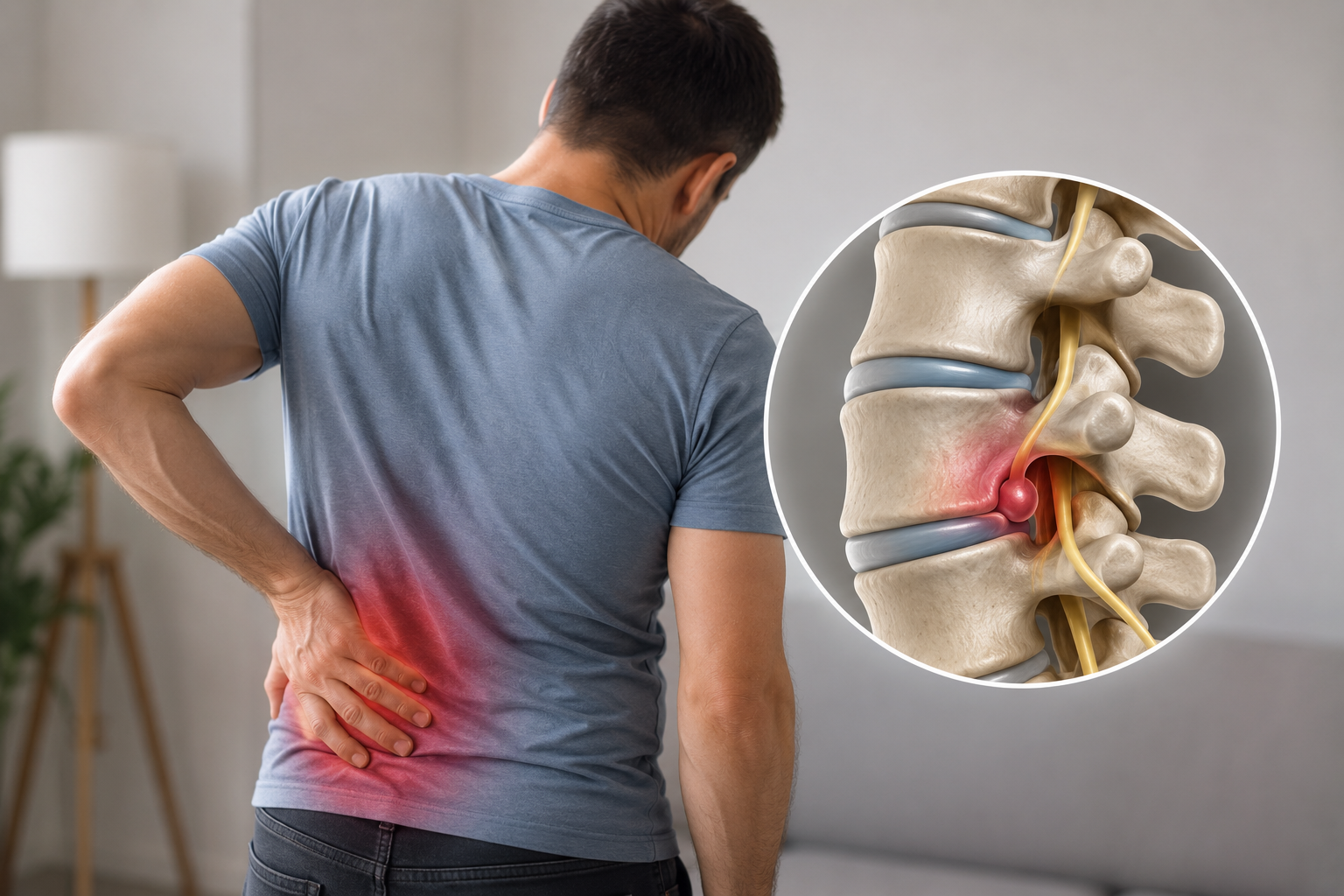
Intervertebral discs are located between the vertebrae and act as shock absorbers for the spine. Under the influence of various factors, part of a disc may protrude beyond its normal position. This condition is known as a herniated disc.
Lumbar disc herniations occur most frequently because the lower back bears the greatest mechanical load during everyday activities.
Common Causes of Lumbar Disc Herniation
Several factors can contribute to the development of a herniated disc, including:
Symptoms of Lumbar Disc Herniation
The symptoms depend on the size and location of the herniation.
The most common symptoms include:
In some patients, a herniated disc may remain asymptomatic for a long period of time.
When Should You Consult a Specialist?
Professional evaluation is recommended if:
Early diagnosis allows healthcare professionals to determine the cause of symptoms and create an appropriate treatment plan.
Modern Treatment Methods
Kinesitherapy
Kinesitherapy is one of the key components of spinal rehabilitation. Specially designed exercises help strengthen muscles, improve blood circulation, and reduce stress on the spine.
Therapeutic Exercise
Regular exercise programs can improve spinal mobility, enhance muscle function, and reduce symptom severity.
Spinal Rehabilitation
A comprehensive rehabilitation program helps improve spinal function, restore mobility, and support a return to normal daily activities.
Lifestyle Modification
Physical activity, weight management, and healthy movement habits play an important role in preventing complications and supporting long-term spinal health.
Can Surgery Be Avoided?
In many cases, yes.
Most patients begin treatment with conservative methods such as physiotherapy, kinesitherapy, and rehabilitation exercises. Surgical intervention is generally considered only when serious neurological symptoms are present or when conservative treatment fails to provide sufficient improvement.
Conclusion
Lumbar disc herniation is a common cause of lower back pain and reduced mobility. Timely diagnosis, regular physical activity, and a properly structured rehabilitation program can help reduce symptoms, improve function, and enhance quality of life.
Lumbar Disc Herniation Treatment at the Bubnovsky Center
The Bubnovsky Center utilizes modern rehabilitation methods and individually designed kinesitherapy programs to help patients restore spinal health.
Our specialists focus on reducing pain, improving mobility, strengthening muscles, and helping patients return to an active and healthy lifestyle through safe, evidence-based movement therapy.
Lumbar disc herniation is one of the most common spinal disorders. It develops as a result of changes in the intervertebral disc and can cause pain, reduced mobility, and other uncomfortable symptoms.
Despite common misconceptions, the presence of a herniated disc does not automatically mean that surgery is necessary. In many cases, significant improvement can be achieved through conservative treatment and a properly designed rehabilitation program.
What Is a Herniated Disc?
Intervertebral discs are located between the vertebrae and act as shock absorbers for the spine. Under the influence of various factors, part of a disc may protrude beyond its normal position. This condition is known as a herniated disc.
Lumbar disc herniations occur most frequently because the lower back bears the greatest mechanical load during everyday activities.
Common Causes of Lumbar Disc Herniation
Several factors can contribute to the development of a herniated disc, including:
- Sedentary lifestyle
- Prolonged sitting
- Excess body weight
- Improper lifting techniques
- Age-related spinal changes
- Weak back muscles
- Excessive physical strain
- Spinal injuries
Symptoms of Lumbar Disc Herniation
The symptoms depend on the size and location of the herniation.
The most common symptoms include:
- Lower back pain
- Pain radiating into the buttock or leg
- Numbness in the lower limbs
- Tingling sensations
- Reduced mobility
- Muscle weakness
- Increased pain during physical activity
In some patients, a herniated disc may remain asymptomatic for a long period of time.
When Should You Consult a Specialist?
Professional evaluation is recommended if:
- Lower back pain persists for an extended period
- Numbness or weakness develops in the legs
- Symptoms become progressively worse
- Movement becomes restricted
- Pain interferes with daily activities
Early diagnosis allows healthcare professionals to determine the cause of symptoms and create an appropriate treatment plan.
Modern Treatment Methods
Kinesitherapy
Kinesitherapy is one of the key components of spinal rehabilitation. Specially designed exercises help strengthen muscles, improve blood circulation, and reduce stress on the spine.
Therapeutic Exercise
Regular exercise programs can improve spinal mobility, enhance muscle function, and reduce symptom severity.
Spinal Rehabilitation
A comprehensive rehabilitation program helps improve spinal function, restore mobility, and support a return to normal daily activities.
Lifestyle Modification
Physical activity, weight management, and healthy movement habits play an important role in preventing complications and supporting long-term spinal health.
Can Surgery Be Avoided?
In many cases, yes.
Most patients begin treatment with conservative methods such as physiotherapy, kinesitherapy, and rehabilitation exercises. Surgical intervention is generally considered only when serious neurological symptoms are present or when conservative treatment fails to provide sufficient improvement.
Conclusion
Lumbar disc herniation is a common cause of lower back pain and reduced mobility. Timely diagnosis, regular physical activity, and a properly structured rehabilitation program can help reduce symptoms, improve function, and enhance quality of life.
Lumbar Disc Herniation Treatment at the Bubnovsky Center
The Bubnovsky Center utilizes modern rehabilitation methods and individually designed kinesitherapy programs to help patients restore spinal health.
Our specialists focus on reducing pain, improving mobility, strengthening muscles, and helping patients return to an active and healthy lifestyle through safe, evidence-based movement therapy.