Knee Osteoarthritis: Symptoms, Causes and Treatment Without Surgery
Does your knee hurt when you climb stairs, stand up from a chair or walk for a long time? Do you sometimes feel stiffness after sitting, or hear cracking sounds when bending your leg?
These symptoms may be associated with knee osteoarthritis, one of the most common causes of knee pain in adults.
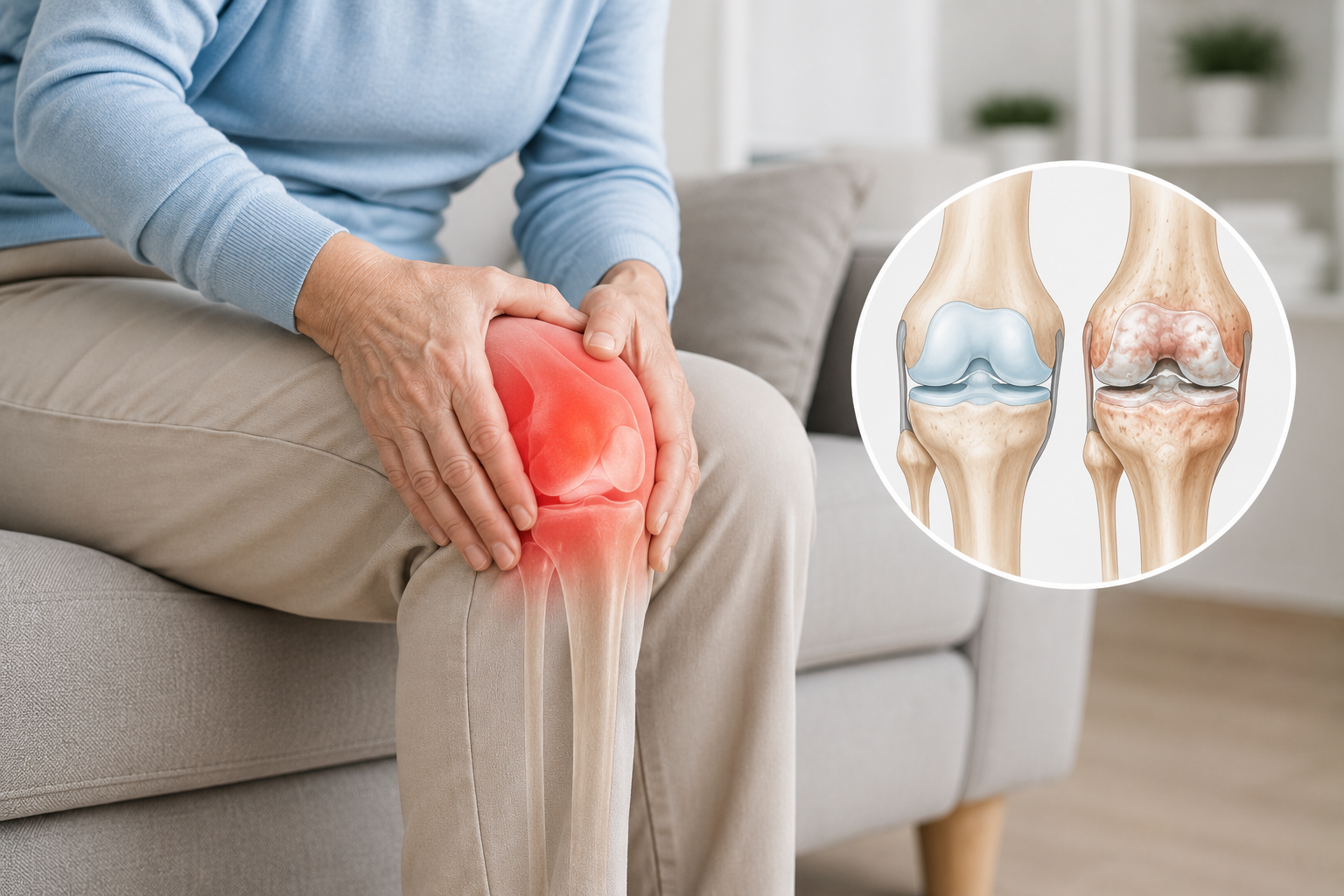
Knee osteoarthritis, also known as gonarthrosis, is a chronic joint condition in which the cartilage, bone and surrounding tissues gradually undergo changes. It can cause pain, stiffness, swelling and reduced mobility.
However, an osteoarthritis diagnosis does not automatically mean that surgery will be necessary. Many people can manage their symptoms and maintain an active lifestyle with appropriate exercise, weight management and individualised rehabilitation.
At Dr. Bubnovsky Center in Riga, we use kinesitherapy — movement-based rehabilitation that combines supervised exercises, muscle strengthening and individually adjusted physical loads.
Our goal is to help patients move more comfortably, improve knee function and return to the activities they enjoy.
What Is Knee Osteoarthritis?
The knee is one of the largest joints in the body. It connects the thigh bone (femur), shin bone (tibia) and kneecap (patella).
The ends of these bones are covered with smooth cartilage, which reduces friction and helps the joint move comfortably.
The knee also contains menisci, ligaments and other structures that help maintain stability and distribute mechanical loads.
With osteoarthritis, several changes may develop:
- the cartilage becomes thinner or changes in structure;
- the space between joint surfaces may narrow;
- bony growths called osteophytes can develop;
- the underlying bone may change;
- inflammation may occur in the joint lining;
- the range of movement may gradually decrease.
These changes can make certain movements painful or difficult.
Importantly, the severity of osteoarthritis visible on an X-ray does not always match the level of pain a person experiences. Some people have noticeable changes but few symptoms, while others experience significant discomfort with less advanced findings.
What Are the Symptoms of Knee Osteoarthritis?
Symptoms often develop gradually and may change over time.
Common signs include:
- knee pain during or after walking;
- discomfort when climbing or descending stairs;
- stiffness after sitting or resting;
- difficulty fully bending or straightening the knee;
- grinding or crackling sensations;
- occasional swelling;
- difficulty getting up from a chair;
- reduced tolerance for physical activity.
Pain When Walking or Climbing Stairs
At first, knee pain may appear only after a long walk or strenuous activity.
Over time, it may become noticeable during shorter walks, when using stairs or while performing routine household tasks.
Knee Stiffness
The knee may feel stiff after waking up or sitting for a long time.
With osteoarthritis, morning stiffness typically lasts less than 30 minutes and often improves with gentle movement.
Cracking or Grinding Sounds
A grinding sensation, known as crepitus, may occur when bending or straightening the knee.
However, cracking sounds alone do not necessarily indicate osteoarthritis, especially when there is no pain or swelling.
Swelling and Reduced Mobility
Some people experience occasional swelling or difficulty fully bending or extending the knee.
If the joint suddenly becomes very swollen, hot and extremely painful, medical assessment is important to rule out other conditions.
What Causes Knee Osteoarthritis?
Knee osteoarthritis usually develops through a combination of factors rather than a single cause.
Age-Related Changes
The risk of osteoarthritis increases with age as joint tissues undergo structural and metabolic changes.
However, osteoarthritis is not an inevitable part of ageing.
Excess Body Weight
Carrying excess weight increases the mechanical load on the knees.
Body fat is also associated with inflammatory and metabolic processes that can affect joint health.
For people who are overweight, weight loss may help reduce pain and improve knee function.
Previous Knee Injuries
Damage to the meniscus, ligaments or bones may increase the risk of osteoarthritis later in life.
A serious knee injury can affect joint mechanics even after the initial injury has healed.
Repetitive Heavy Physical Loads
Some jobs require frequent squatting, kneeling, heavy lifting or prolonged physically demanding activity.
These repeated loads may contribute to the risk of knee osteoarthritis, especially when combined with other factors.
Genetics
Family history and inherited characteristics can influence susceptibility to osteoarthritis.
Reduced Muscle Strength and Physical Activity
When physical activity decreases, the muscles supporting the knee may become weaker.
Reduced muscle strength can make walking, climbing stairs and other daily activities more difficult.
However, weak muscles are not the only cause of osteoarthritis.
Can Knee Osteoarthritis Be Treated Without Surgery?
In many cases, yes.
Non-surgical treatment is usually the first approach for people with knee osteoarthritis.
It may include:
- therapeutic strengthening exercises;
- regular low-impact physical activity;
- kinesitherapy and functional rehabilitation;
- weight management when appropriate;
- adjustments to everyday physical loads;
- pain-relieving medication when prescribed by a doctor;
- selected supportive treatments when clinically indicated.
The NICE guidelines for osteoarthritis management identify therapeutic exercise and weight management, when appropriate, as core parts of treatment.
Exercise can help relieve pain and improve joint function, although it cannot be guaranteed to reverse cartilage damage.
How Can Kinesitherapy Help With Knee Osteoarthritis?
Kinesitherapy is a rehabilitation approach based on individually selected therapeutic movements and exercises.
At Dr. Bubnovsky Center, the programme focuses on active participation in recovery.
Instead of relying exclusively on passive treatments, patients gradually work on improving their physical abilities through controlled exercise.
The main goals are to:
- Strengthen the muscles supporting the knee.
- Improve knee bending and straightening.
- Develop muscle endurance.
- Improve balance and coordination.
- Increase tolerance for walking and everyday activities.
- Reduce pain-related movement limitations.
- Help patients maintain a more active lifestyle.
The exercise programme is selected according to the patient's symptoms, mobility, physical condition and medical contraindications.
The aim is to improve knee function and quality of life, not to promise the regrowth of damaged cartilage.
Why Is Muscle Strengthening So Important?
The knee depends on surrounding muscles to help stabilise the joint and control movement.
Several muscle groups are particularly important:
- Quadriceps: help straighten the knee and support movements such as walking and standing up.
- Hamstrings: contribute to knee bending and movement control.
- Gluteal muscles: support hip and pelvic stability and help control leg alignment.
- Calf muscles: contribute to walking, balance and lower-limb movement.
When these muscles lose strength, everyday movements may require greater effort.
Strengthening exercises can help patients regain confidence in activities such as using stairs, getting out of a chair and walking longer distances.
The American Academy of Orthopaedic Surgeons also identifies exercise and physical therapy as important non-surgical treatment options for knee arthritis.
Exercises on the Bubnovsky Multifunctional Trainer (MTB)
Kinesitherapy at Dr. Bubnovsky Center may include sessions using the Bubnovsky Multifunctional Trainer (MTB).
This equipment uses adjustable resistance and allows exercises to be performed in different body positions.
The trainer may be used to:
- strengthen thigh and lower-leg muscles;
- improve muscle endurance;
- train the hips and trunk;
- develop movement coordination;
- perform selected exercises with reduced axial loading;
- increase resistance gradually.
An instructor supervises the session, monitors exercise technique and adjusts the workload when needed.
The MTB does not completely eliminate stress on the knee joint. Exercises must be selected according to each patient's condition and tolerance.
Which Exercises May Help With Knee Osteoarthritis?
There is no single exercise programme that is suitable for everyone.
The best exercises depend on the severity of symptoms, joint mobility, muscle strength and individual physical abilities.
Quadriceps Strengthening
Exercises targeting the quadriceps can help improve knee stability and make activities such as standing up or climbing stairs easier.
Hamstring and Gluteal Exercises
Strengthening the muscles at the back of the thigh and around the hips can support coordinated movement and improve lower-limb function.
Gentle Mobility Exercises
Controlled bending and straightening movements can help maintain knee mobility.
Balance and Coordination Training
Balance exercises may be included when appropriate to improve stability during walking and everyday activities.
Low-Impact Aerobic Activity
Depending on symptoms, suitable activities may include:
- walking at a manageable pace;
- stationary cycling;
- swimming;
- water-based exercises.
Even when exercise initially causes mild discomfort, consistent and appropriately adjusted physical activity can be beneficial over time.
Severe pain, increasing swelling or worsening mobility are reasons to review the exercise programme.
How Does Rehabilitation Work at Dr. Bubnovsky Center?
Step 1: Initial Consultation
The specialist discusses the patient's symptoms, medical history and current physical limitations.
Knee mobility, muscle function and available examination results are evaluated.
Step 2: Individual Exercise Programme
Exercises are selected according to the patient's needs, with appropriate resistance and movement ranges.
Step 3: Adaptation
The patient learns correct exercise techniques under an instructor's supervision.
The initial workload is adjusted to individual tolerance.
Step 4: Gradual Strengthening
As muscle strength and movement control improve, exercises can gradually become more challenging.
Step 5: Progress Assessment
The specialist evaluates changes in knee mobility, muscle strength and the ability to perform daily activities.
The programme is adjusted as needed.
Does Losing Weight Help Knee Osteoarthritis?
For people who are overweight, weight management can be an important part of treatment.
Reducing body weight may decrease stress on the knee joints and make walking and other activities more comfortable.
According to NICE recommendations, even modest weight loss can be beneficial. A 10% reduction in body weight generally provides greater improvements in pain and function than a 5% reduction.
Weight management should be approached gradually, with realistic goals appropriate to the patient's health.
Can You Prevent Knee Osteoarthritis?
Not every case of knee osteoarthritis can be prevented, particularly when age, genetics or previous injuries play a role.
However, several habits may help support knee health and reduce modifiable risk factors:
- maintain a healthy body weight;
- stay regularly physically active;
- strengthen the muscles of the legs and hips;
- gradually increase exercise intensity;
- avoid repeated excessive loading beyond your current capacity;
- seek appropriate treatment and rehabilitation after knee injuries.
The goal is not to avoid movement but to maintain a sustainable level of physical activity.
Can Knee Osteoarthritis Be Stopped or Reversed?
Osteoarthritis develops differently in different people.
Some patients experience slow structural changes and maintain good knee function for many years.
Regular therapeutic exercise, appropriate weight management and strengthening can help control symptoms and improve mobility.
However, there is currently no guarantee that exercise will completely stop cartilage changes or reverse established osteoarthritis.
Treatment should focus on what matters most to the patient: less pain, improved movement and the ability to continue everyday activities.
When Might Knee Replacement Surgery Be Necessary?
Knee replacement may be considered when pain, stiffness or movement restrictions significantly affect quality of life and appropriate non-surgical treatment has not provided sufficient relief.
Possible reasons for an orthopaedic assessment include:
- persistent severe pain;
- substantial difficulty walking;
- significant movement limitations;
- progressive joint deformity;
- pain that affects sleep;
- inability to manage normal daily activities.
The decision is individual and should be made with an orthopaedic specialist.
When Should You Seek Medical Attention?
Knee pain is not always caused by osteoarthritis.
Seek urgent medical assessment if:
- the knee suddenly becomes severely swollen;
- the joint is hot, red and extremely painful;
- swelling or pain occurs with fever;
- you cannot bear weight after an injury;
- there is a visible deformity;
- symptoms worsen rapidly.
These signs may indicate an injury, infection or another condition requiring prompt treatment.
Knee Osteoarthritis Treatment in Riga
At Dr. Bubnovsky Center in Riga, we help patients with knee osteoarthritis, chronic knee pain, restricted mobility and reduced physical function.
Our rehabilitation programmes combine individual functional assessment, supervised kinesitherapy and gradual progression of physical activity.
The programme may focus on:
- improving knee mobility;
- strengthening the leg muscles;
- developing physical endurance;
- improving balance and coordination;
- increasing walking tolerance;
- returning to daily activities with greater confidence.
Our goal is to help patients maintain freedom of movement, improve physical abilities and enjoy a better quality of life.
Book a Consultation at Dr. Bubnovsky Center in Riga
If knee pain, stiffness or limited mobility is affecting your daily life, a specialist consultation can help assess your condition and determine whether kinesitherapy may be appropriate.
Special Offer at Dr. Bubnovsky Center
When purchasing a 12-session programme, you receive:
- a free initial consultation;
- a follow-up consultation with your treating doctor after the 6th session;
- another consultation after the 11th session to assess progress and adjust the programme if necessary.
Dr. Bubnovsky Center — Riga
📍 Brīvības gatve 214B, Riga, Latvia
📞 +371 23 271 732
References and Further Reading
1. Dr. Bubnovsky Center — Knee Osteoarthritis (Gonarthrosis)
2. National Institute for Health and Care Excellence (NICE) — Osteoarthritis in Over 16s: Diagnosis and Management
3. American Academy of Orthopaedic Surgeons (AAOS) — Arthritis of the Knee
4. NICE — Therapeutic Exercise for Osteoarthritis
This article is for informational purposes only and does not replace professional medical advice. Rehabilitation programmes should be adapted to each patient's diagnosis, physical condition and medical contraindications.