Joint Pain: Causes, Symptoms and Physiotherapy in Riga
Do your knees hurt when walking, is it difficult to raise your arm because of shoulder pain, or do your hips feel stiff after sitting for a long time? Joint pain can interfere with work, exercise and everyday activities. Sometimes discomfort improves with rest, but in other cases, pain persists for weeks or gradually becomes worse.
Joint pain can have different causes, including overuse, injuries, osteoarthritis, inflammatory conditions, or problems affecting the surrounding muscles and tendons. Before starting rehabilitation, it is important to understand what is causing the symptoms.
At Dr. Bubnovska Centrs in Riga, a physiotherapist assesses joint mobility, muscle strength and functional limitations. If kinesiotherapy is appropriate, an individual exercise programme is developed with gradually increasing physical activity.
What Causes Joint Pain?
Joints allow us to move and withstand physical loads every day. Pain may originate within the joint itself or from surrounding structures, including muscles, tendons and ligaments.
Common causes of joint pain include:
- Osteoarthritis — changes within a joint that may cause pain, stiffness and restricted movement.
- Muscle and tendon overuse — repetitive movements, heavy physical work or unfamiliar sports activities.
- Injuries — damage to ligaments, menisci and tendons, fractures and their long-term consequences.
- Inflammatory joint diseases — rheumatoid arthritis and other types of inflammatory arthritis.
- Gout — a condition that may cause sudden episodes of severe joint pain and inflammation.
- Physical inactivity — can contribute to muscle weakness and reduced functional capacity.
- Excess body weight — increases mechanical stress, particularly on the knees and hips.
Sometimes pain felt around a joint is related to nerve irritation or conditions affecting nearby structures.
The location of pain alone is not enough to establish a diagnosis.
Common Symptoms of Joint Problems
Joint pain does not affect everyone in the same way. Some people experience discomfort only during physical activity, while others have persistent pain at rest or pronounced stiffness.
Common symptoms include:
- pain when walking, climbing stairs or lifting objects;
- reduced range of motion;
- stiffness after rest or in the morning;
- swelling around a joint;
- discomfort during specific movements;
- reduced muscle strength and endurance;
- a feeling of joint instability;
- difficulty performing everyday activities.
Clicking or cracking sounds in joints without pain or restricted movement do not necessarily indicate a medical condition.
If symptoms repeatedly occur, become worse or interfere with daily activities, it is important to identify the underlying cause.
When to Seek Urgent Medical Attention
Some symptoms may indicate a serious injury or medical condition that requires assessment before starting physical exercises.
Seek urgent medical attention if:
- severe pain, joint deformity or an inability to bear weight develops after an injury;
- significant numbness occurs following trauma;
- a joint suddenly becomes very swollen, red and hot;
- joint pain is accompanied by a high temperature, chills or a significant deterioration in general health.
A hot, painful and swollen joint requires urgent medical assessment because infection is one possible cause.
Persistent morning stiffness, recurring swelling in several joints or unexplained worsening pain should also be evaluated by a doctor.
In these situations, kinesiotherapy should not replace necessary medical diagnosis and treatment.
Knee, Shoulder and Hip Pain
The symptoms of joint problems depend on which joint is affected and the underlying cause.
Knee Pain
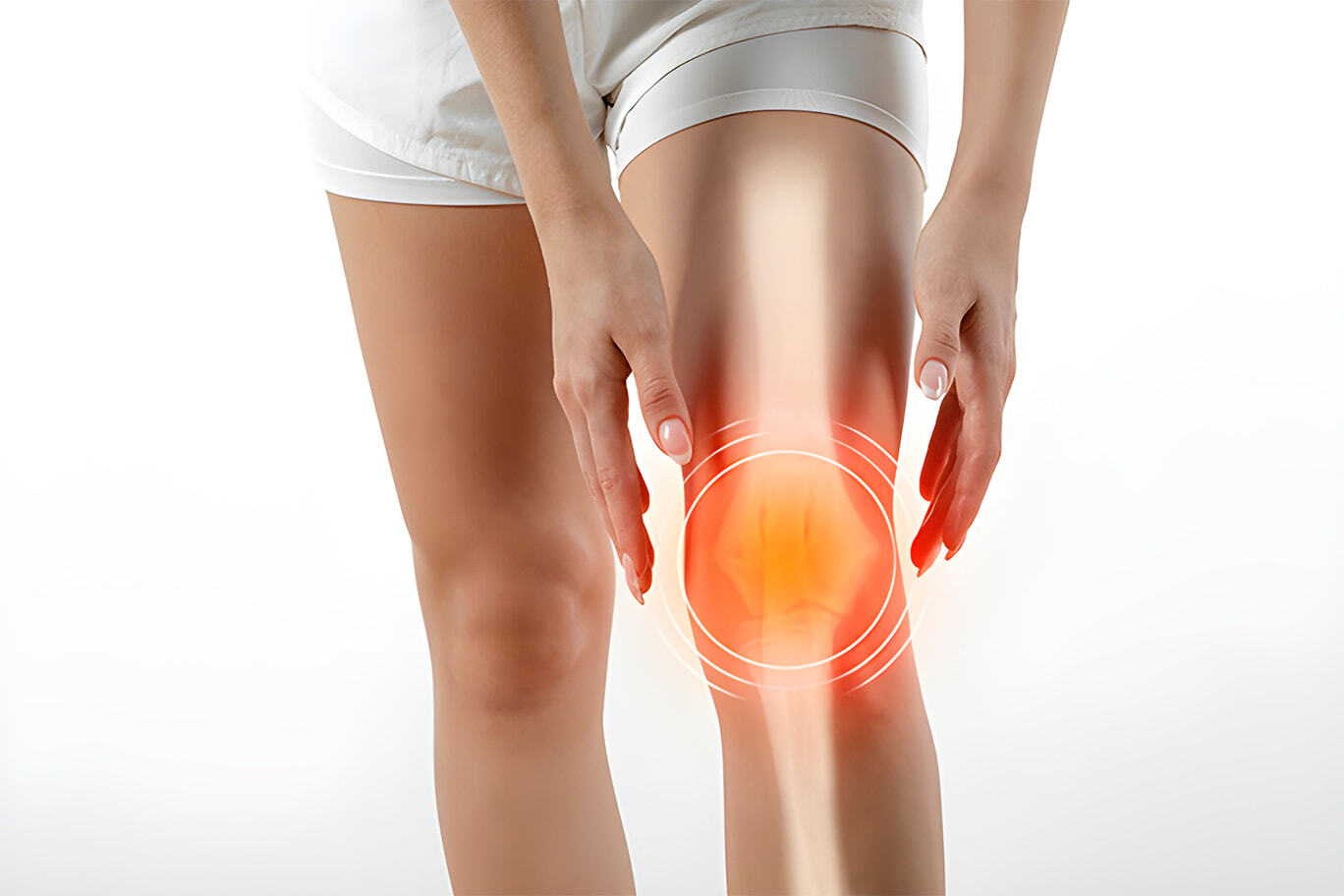
Knee pain may occur while walking, squatting, climbing stairs or standing for long periods. Possible causes include osteoarthritis, meniscus injuries, tendon overuse and other conditions.
During rehabilitation, it is important to assess not only the knee itself but also thigh muscle strength, mobility and movement control throughout the lower limb.
Shoulder Pain
Shoulder pain often makes it difficult to raise an arm, get dressed or perform activities above shoulder level. It may be associated with rotator cuff tendons, restricted shoulder mobility or conditions affecting the joint.
The exercise programme depends on the cause of pain and the condition of the surrounding muscles.
Hip Pain
Hip pain may be felt in the groin, outer thigh or buttock area. It can make walking, getting out of a chair or putting on shoes more difficult.
A physiotherapist assesses joint mobility, muscle strength, walking patterns and other possible sources of pain.
Pain in Several Joints
If multiple joints, such as the hands, knees or shoulders, are painful at the same time, particularly when accompanied by morning stiffness or swelling, inflammatory and systemic conditions should be considered.
In such cases, exercise alone may not be sufficient. Medical evaluation and treatment by an appropriate specialist may be required.
How Is the Cause of Joint Pain Diagnosed?
Assessment begins with a discussion of symptoms and a physical examination.
The specialist asks when the pain started, what makes it worse, whether an injury occurred, whether morning stiffness is present and which movements have become difficult.
The assessment may include:
- joint mobility and range of motion;
- muscle strength;
- tenderness and pain in surrounding tissues;
- swelling and other signs of inflammation;
- joint stability and movement control;
- the ability to perform functional movements.
If clinically indicated, a doctor may recommend X-rays, ultrasound, magnetic resonance imaging (MRI) or laboratory tests.
Not every patient with joint pain needs an MRI. For example, in many cases, osteoarthritis can be diagnosed clinically without routine MRI examinations.
The choice of investigations depends on symptoms, examination findings and the suspected condition.
How Physiotherapy and Kinesiotherapy Can Help
Kinesiotherapy is a rehabilitation approach based on individually selected therapeutic exercises.
For many musculoskeletal conditions, exercise therapy can improve physical function, support joint mobility and help reduce symptoms.
For example, international clinical guidelines recommend individually tailored therapeutic exercise as a core component of osteoarthritis management.
Depending on the patient's condition, an exercise programme may focus on:
- restoring joint mobility;
- strengthening muscles that support and stabilise the joints;
- improving coordination and movement control;
- increasing tolerance to everyday physical activities;
- reducing functional limitations;
- gradually returning to work, walking and sport.
Exercise intensity is increased gradually, considering symptoms during and after each session.
It is important to understand that not all joint pain can be treated with exercise alone. Infections, active inflammatory diseases, gout and serious injuries may require specific medical treatment. Kinesiotherapy can be part of rehabilitation when it is safe and clinically appropriate.
What Exercise Equipment Is Used for Joint Pain Rehabilitation?
At Dr. Bubnovska Centrs in Riga, rehabilitation sessions primarily use Bubnovsky Multifunctional Training Machines (MTB). Other rehabilitation equipment and joint mobility exercises may also be included.
The MTB is a specialised cable-based exercise system with pulleys and adjustable resistance. Its design allows patients to perform exercises in different positions, including sitting and lying down, with individually adjusted loads.
One feature of the MTB is the possibility of performing exercises in a decompression setting, reducing substantial axial loading on the spine. This allows certain movements to be performed with less mechanical stress on selected joints.
When used as part of an appropriately designed rehabilitation programme, MTB exercises can help:
- strengthen muscles supporting the knee, hip and shoulder joints;
- gradually improve joint range of motion;
- develop muscle strength and coordination;
- train muscles using adjustable resistance;
- support a gradual return to everyday physical activities.
For example, patients with knee pain may perform exercises targeting the thigh and gluteal muscles. For shoulder problems, exercises may focus on the shoulder girdle muscles. When hip mobility is limited, the programme may include exercises strengthening the pelvic and lower limb muscles.
In addition to MTB exercises, rehabilitation may include other specialised training equipment and floor-based joint exercises, performed on an exercise mat to improve mobility, flexibility and muscle control.
The specific equipment, exercises, resistance levels and number of repetitions are selected individually following the initial assessment and functional testing.
During sessions, a specialist monitors exercise technique and the patient's response to physical activity. Exercises may be modified, simplified or temporarily discontinued when necessary.
Exercise machines are rehabilitation tools, not a universal treatment for every joint disease. Their use must be appropriate for the patient's condition, functional abilities and medical recommendations.
Why Movement and Muscle Strength Matter for Joint Health
Long periods of reduced physical activity can lead to muscle weakness and make everyday movements more difficult.
Strong muscles help control movement, support joint stability and improve the body's ability to tolerate physical loads.
However, this does not mean that people with joint pain should immediately begin intensive exercise.
Rehabilitation generally starts with activities that the patient can tolerate based on their health and physical condition. Exercise difficulty can then be increased gradually.
For example, a knee rehabilitation programme may include exercises for the thigh and gluteal muscles, balance training and a progressive return to walking.
For shoulder pain, exercises may focus on restoring mobility and strengthening the shoulder girdle muscles.
The selection of exercises always depends on the identified cause of pain.
What Happens During the Initial Consultation at Dr. Bubnovska Centrs in Riga?
The initial consultation begins with an assessment by a physiotherapist.
The specialist discusses the patient's symptoms, previous injuries, existing medical conditions, usual physical activity and available examination results.
A functional and myofascial assessment is then performed to evaluate movement, muscle strength, tissue tenderness and functional limitations.
If the patient's condition allows, strength testing may be performed using specialised exercise equipment, including the Bubnovsky Multifunctional Training Machine (MTB).
Based on the assessment, the physiotherapist determines:
- whether kinesiotherapy is suitable;
- which movements and exercises are appropriate;
- what level of physical load is safe to begin with;
- which rehabilitation goals should be prioritised;
- whether further diagnostic tests or consultation with another specialist are required.
During subsequent sessions, the specialist monitors exercise technique and the patient's response to physical activity.
If unwanted symptoms occur or pain increases, the exercise programme is adjusted.
Frequently Asked Questions
Can I exercise if my joints hurt?
In many cases, appropriately selected exercises are safe and beneficial. However, the cause of pain should be identified first. Following a recent injury, or in the presence of significant swelling, suspected infection or active inflammation, exercise may be inappropriate until a medical assessment has been completed.
Can physiotherapy help with osteoarthritis?
Yes. Individually tailored therapeutic exercise is one of the main non-pharmacological treatments for osteoarthritis. It can help reduce pain and improve physical function, although it cannot reverse all structural changes within the joint.
Do I need an MRI before my first appointment?
Not necessarily. In many cases, a clinical examination is the appropriate starting point. If you already have X-ray, ultrasound, MRI or other examination results, bring them to your appointment. Additional investigations are recommended when clinically indicated.
How long does joint rehabilitation take?
The duration depends on the underlying cause, severity of symptoms, other medical conditions and response to exercise. For chronic conditions, the goal may be long-term symptom management and maintaining mobility. Progress is assessed during follow-up consultations, and the rehabilitation programme is adjusted when necessary.
Book an Initial Consultation in Riga
If pain in your knees, shoulders, hips or other joints makes it difficult to move comfortably, work or enjoy everyday activities, book an initial consultation at Dr. Bubnovska Centrs in Riga.
A physiotherapist will assess your condition, identify possible causes of functional limitations and explain which rehabilitation approaches may be suitable for you.
Book online at bubnovsky.lv or call +371 23 271 732.
When purchasing a package of 12 rehabilitation sessions, the initial consultation is provided free of charge.
Follow-up consultations with your treating physiotherapist take place after the 6th and 11th sessions to evaluate progress and adjust your individual rehabilitation programme if necessary.
This article is for informational purposes only and does not replace professional medical advice. Diagnostic and treatment decisions depend on the patient's individual medical condition.
References
- NHS — Joint Pain: https://www.nhs.uk/symptoms/joint-pain/
- NHS — Arthritis: https://www.nhs.uk/conditions/arthritis/
- NHS — Physiotherapy: https://www.nhs.uk/tests-and-treatments/physiotherapy/
- NICE — Osteoarthritis in Over 16s: Diagnosis and Management: https://www.nice.org.uk/guidance/ng226/chapter/recommendations
- NICE — Therapeutic Exercise for Osteoarthritis: https://www.nice.org.uk/guidance/qs87/chapter/quality-statement-4-therapeutic-exercise
- Dr. Bubnovska Centrs — The Bubnovsky Method in Riga: https://bubnovsky.lv/zinas_ru/metod-doktora-bubnovskogo-riga
- Dr. Bubnovska Centrs — Frequently Asked Questions: https://bubnovsky.lv/jautajumi_ru