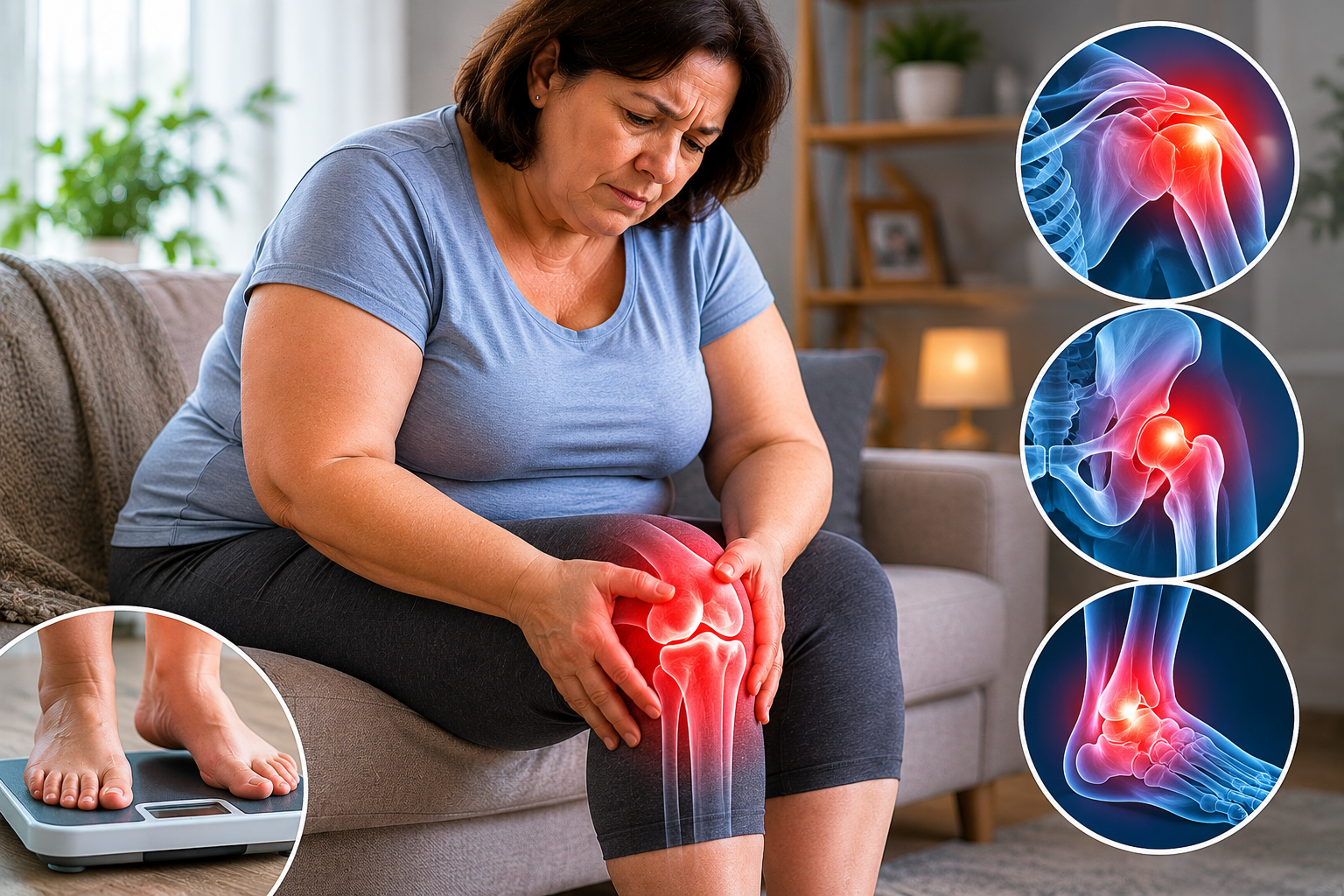
How Excess Weight Affects Your Joints
Joint health is closely connected to body weight. Every additional kilogram places extra stress on the musculoskeletal system, particularly on the joints of the legs and the spine. Over time, this increased load can accelerate joint wear and tear, contribute to pain, and reduce mobility.
Maintaining a healthy body weight is therefore an important part of preventing joint problems and preserving an active lifestyle.
Which Joints Are Most Affected?
The joints that bear the body's weight are exposed to the greatest mechanical stress on a daily basis.
The most commonly affected areas include:
These are also the areas where pain and age-related changes most frequently occur.
Why Is Excess Weight Harmful to the Joints?
Increased Mechanical Stress
During walking, the load on the knee joints can exceed body weight several times over. The higher the body weight, the greater the stress placed on the joint surfaces.
Accelerated Cartilage Wear
Excess pressure contributes to faster deterioration of the cartilage that cushions and protects the joints.
Reduced Physical Activity
People carrying excess weight often move less, which may further weaken muscles and negatively affect joint function.
Reduced Mobility
As body weight increases, movement may become more difficult and uncomfortable, affecting daily activities and overall quality of life.
Common Symptoms
Excess stress on the joints may contribute to symptoms such as:
These symptoms can gradually worsen if the underlying causes are not addressed.
Can Joint Stress Be Reduced?
Yes. Even modest weight loss can significantly decrease the load placed on the joints and improve overall comfort and mobility.
Several strategies may help:
Regular Physical Activity
Movement helps strengthen muscles, improve circulation, and support healthy joint function.
Kinesitherapy
Individually prescribed exercises allow people to safely increase physical activity while improving joint mobility and stability.
Benefits may include:
Balanced Nutrition
Healthy eating habits can support weight management and contribute to overall musculoskeletal health.
Joint Rehabilitation
Personalized rehabilitation programs can help improve mobility, reduce discomfort, and support long-term joint function.
Why Muscle Strength Is Important
Strong muscles act as a natural support system for the joints. They help distribute forces more evenly during movement and reduce pressure on joint surfaces.
Particular attention should be given to strengthening:
A strong muscular system can improve stability, enhance movement efficiency, and reduce the risk of joint-related problems.
The Role of Physiotherapy
Physiotherapy focuses on restoring healthy movement patterns and improving overall function.
A physiotherapist may assess:
Based on this assessment, an individualized exercise and rehabilitation plan can be developed.
Why Prevention Matters
The earlier a person begins addressing excess weight and joint health, the easier it becomes to prevent chronic pain and mobility limitations.
Regular movement and proper rehabilitation can help:
Conclusion
Excess weight is one of the important risk factors for joint disorders and chronic pain. Maintaining a healthy body weight, staying physically active, and strengthening the muscles that support the joints can help preserve mobility and reduce stress on the musculoskeletal system.
Joint Rehabilitation at the Bubnovsky Center
The Bubnovsky Center in Riga uses modern kinesitherapy and rehabilitation methods designed to safely increase physical activity, improve joint function, and enhance overall quality of life.
Individualized rehabilitation programs help patients improve mobility, strengthen supporting muscles, reduce discomfort, and return to a more active lifestyle.
Joint health is closely connected to body weight. Every additional kilogram places extra stress on the musculoskeletal system, particularly on the joints of the legs and the spine. Over time, this increased load can accelerate joint wear and tear, contribute to pain, and reduce mobility.
Maintaining a healthy body weight is therefore an important part of preventing joint problems and preserving an active lifestyle.
Which Joints Are Most Affected?
The joints that bear the body's weight are exposed to the greatest mechanical stress on a daily basis.
The most commonly affected areas include:
- Knee joints
- Hip joints
- Ankle joints
- Foot joints
- The spine
These are also the areas where pain and age-related changes most frequently occur.
Why Is Excess Weight Harmful to the Joints?
Increased Mechanical Stress
During walking, the load on the knee joints can exceed body weight several times over. The higher the body weight, the greater the stress placed on the joint surfaces.
Accelerated Cartilage Wear
Excess pressure contributes to faster deterioration of the cartilage that cushions and protects the joints.
Reduced Physical Activity
People carrying excess weight often move less, which may further weaken muscles and negatively affect joint function.
Reduced Mobility
As body weight increases, movement may become more difficult and uncomfortable, affecting daily activities and overall quality of life.
Common Symptoms
Excess stress on the joints may contribute to symptoms such as:
- Knee pain
- Hip pain
- Rapid leg fatigue
- Joint stiffness
- Reduced endurance
- Discomfort while walking
These symptoms can gradually worsen if the underlying causes are not addressed.
Can Joint Stress Be Reduced?
Yes. Even modest weight loss can significantly decrease the load placed on the joints and improve overall comfort and mobility.
Several strategies may help:
Regular Physical Activity
Movement helps strengthen muscles, improve circulation, and support healthy joint function.
Kinesitherapy
Individually prescribed exercises allow people to safely increase physical activity while improving joint mobility and stability.
Benefits may include:
- Improved movement quality
- Reduced joint stress
- Better muscle support
- Enhanced mobility
- Increased endurance
Balanced Nutrition
Healthy eating habits can support weight management and contribute to overall musculoskeletal health.
Joint Rehabilitation
Personalized rehabilitation programs can help improve mobility, reduce discomfort, and support long-term joint function.
Why Muscle Strength Is Important
Strong muscles act as a natural support system for the joints. They help distribute forces more evenly during movement and reduce pressure on joint surfaces.
Particular attention should be given to strengthening:
- Leg muscles
- Gluteal muscles
- Core muscles
A strong muscular system can improve stability, enhance movement efficiency, and reduce the risk of joint-related problems.
The Role of Physiotherapy
Physiotherapy focuses on restoring healthy movement patterns and improving overall function.
A physiotherapist may assess:
- Joint mobility
- Muscle strength
- Posture
- Movement mechanics
- Functional limitations
Based on this assessment, an individualized exercise and rehabilitation plan can be developed.
Why Prevention Matters
The earlier a person begins addressing excess weight and joint health, the easier it becomes to prevent chronic pain and mobility limitations.
Regular movement and proper rehabilitation can help:
- Maintain joint mobility
- Improve muscle strength
- Reduce discomfort
- Support healthy posture
- Improve quality of life
- Promote long-term independence
Conclusion
Excess weight is one of the important risk factors for joint disorders and chronic pain. Maintaining a healthy body weight, staying physically active, and strengthening the muscles that support the joints can help preserve mobility and reduce stress on the musculoskeletal system.
Joint Rehabilitation at the Bubnovsky Center
The Bubnovsky Center in Riga uses modern kinesitherapy and rehabilitation methods designed to safely increase physical activity, improve joint function, and enhance overall quality of life.
Individualized rehabilitation programs help patients improve mobility, strengthen supporting muscles, reduce discomfort, and return to a more active lifestyle.