Hip Osteoporosis: Symptoms, Diagnosis, and Restoring Mobility in Riga
Osteoporosis often develops without noticeable symptoms. People continue walking, working, and carrying out their daily activities without realizing that their bones have become weaker. Sometimes, the condition is only discovered after a fall, when even a minor injury results in a hip fracture.
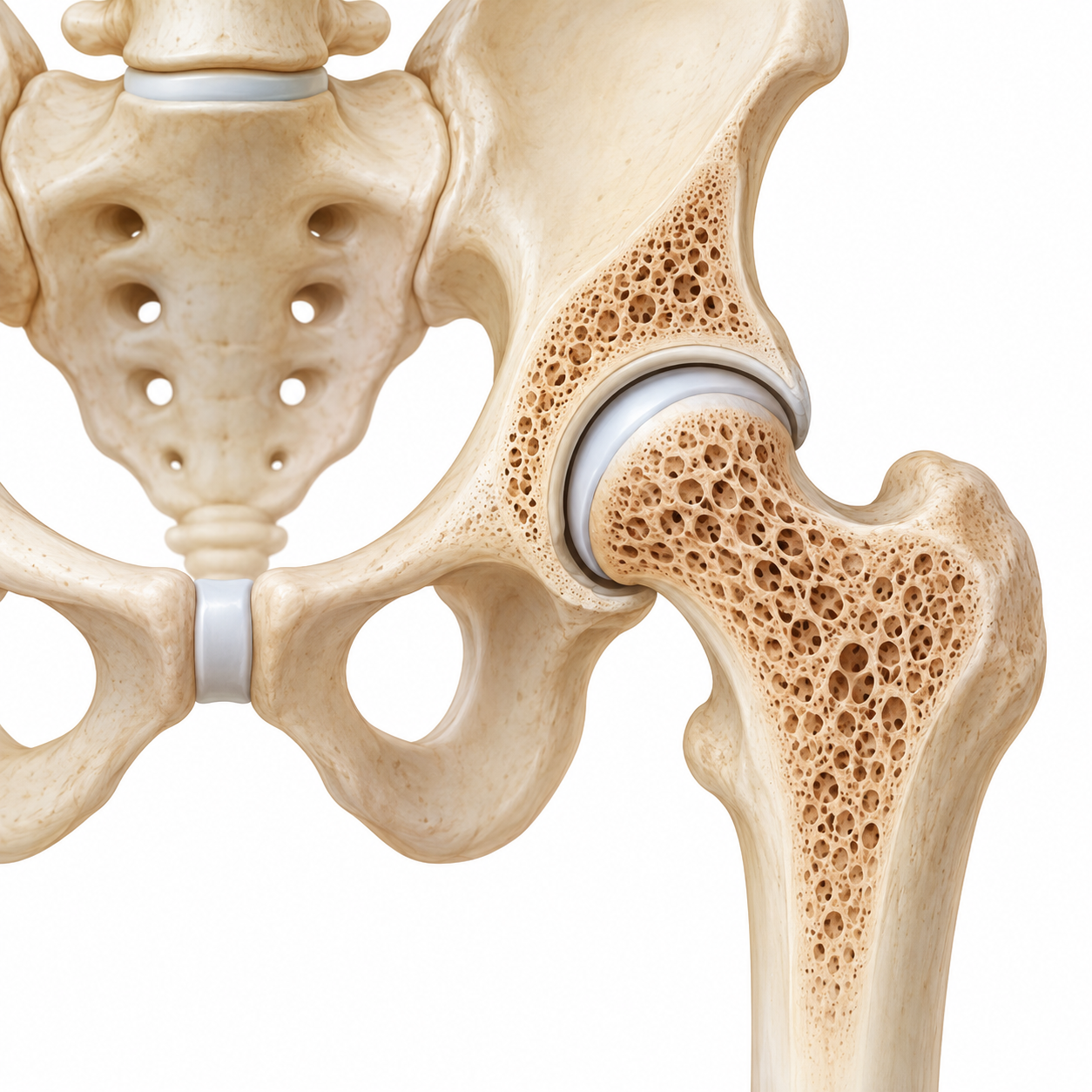
Osteoporosis is a condition characterized by reduced bone strength and an increased risk of fractures. It can affect different parts of the skeleton, including the femoral neck. Therefore, the term "hip osteoporosis" generally refers to decreased bone density in the hip region rather than a disease of the hip joint itself.
At Dr. Bubnovska Centrs in Riga, a physiotherapist assesses muscle condition, joint mobility, and the ability to perform movements safely. If there are no contraindications, an individualized kinesiotherapy program is developed to strengthen muscles, improve balance, and maintain physical activity.
What Causes Osteoporosis?
Bone tissue is constantly being renewed. As people age, the process of bone breakdown may begin to exceed the formation of new bone tissue. As a result, bones gradually lose density and become more fragile.
The main risk factors include:
- Age-related and hormonal changes. The risk is particularly high in women after menopause due to declining estrogen levels.
- Family history. Osteoporosis or a history of hip fractures in parents.
- Calcium and vitamin D deficiency. These nutrients are essential for maintaining bone health.
- Insufficient physical activity. A lack of weight-bearing activity contributes to reduced bone strength.
- Chronic medical conditions. Certain endocrine disorders, intestinal diseases, and other conditions may affect bone metabolism.
- Certain medications. For example, long-term use of systemic glucocorticoids.
Osteoporosis does not affect only older adults. It can also develop at a younger age, particularly when additional risk factors are present.
When Is Urgent Medical Attention Necessary?
If severe pain develops in the groin, thigh, or hip area after a fall, a fracture must be ruled out.
An inability to stand, bear weight on the affected leg, or walk independently requires urgent medical attention. In some cases, the injured leg may appear shorter or turned outward.
If a femoral neck fracture is suspected, do not attempt to mobilize the joint, perform exercises, or continue walking despite the pain.
Even if a person can still walk after a fall, persistent pain in the groin or thigh requires medical evaluation.
Why Is Osteoporosis Particularly Dangerous for the Femoral Neck?
The femoral neck connects the head of the femur to the main part of the thigh bone. This area bears considerable weight during standing and walking.
In osteoporosis, bone strength decreases, meaning a fracture may occur even after a fall from standing height.
Osteoporosis itself usually does not cause pain. If a person experiences persistent hip pain, the cause may be osteoarthritis, inflammation, muscle injury, or another medical condition.
A femoral neck fracture is one of the most serious complications of osteoporosis. It often requires surgery followed by rehabilitation. After such an injury, regaining previous mobility and independence can be challenging.
Therefore, it is important not only to maintain bone health but also to strengthen muscles, improve balance, and reduce the risk of falls.
How Is Osteoporosis Diagnosed?
A doctor evaluates the patient's age, previous fractures, existing medical conditions, medications, and other risk factors.
The primary method for measuring bone mineral density is dual-energy X-ray absorptiometry (DXA), also known as bone densitometry. The lumbar spine and proximal femur are typically examined.
When necessary, blood tests may be performed to identify abnormalities in calcium and vitamin D metabolism, as well as possible causes of secondary osteoporosis.
To assess fracture risk, a doctor may use the FRAX assessment tool, which considers age, clinical risk factors, and bone density measurements when available.
The examination results help determine whether medication is necessary and what level of physical activity is safe.
How Can Kinesiotherapy Help with Osteoporosis?
Kinesiotherapy is a movement-based therapeutic approach. In people with osteoporosis, physical exercise helps maintain muscle strength, improve coordination, and reduce the risk of falls.
At Dr. Bubnovska Centrs, an individualized exercise program may include:
- Strengthening the leg, gluteal, and back muscles.
- Improving stability and balance.
- Maintaining and improving hip joint mobility.
- Gradually increasing muscle strength and endurance.
- Practicing functional movements needed for walking, standing up from a chair, and performing everyday activities.
Sessions use Bubnovsky multifunctional exercise machines (MTB), which allow resistance to be adjusted and exercises to be adapted to each patient's physical abilities.
A specialist monitors exercise technique, breathing, and tolerance to physical activity. In cases of severe osteoporosis, previous fractures, or balance disorders, the exercise program requires particular caution.
Strength training and balance exercises are recommended for people with osteoporosis because they help maintain bone and muscle strength and reduce the likelihood of falls.
It is important to understand that kinesiotherapy does not replace medication prescribed to reduce fracture risk. The most appropriate approach combines osteoporosis treatment, suitable physical activity, and injury prevention.
What Happens During the Initial Consultation at Dr. Bubnovska Centrs in Riga?
During the initial consultation, a certified physiotherapist discusses the patient's symptoms, previous fractures, usual physical activity, and available examination results. Particular attention is given to bone densitometry findings and existing medical conditions.
A functional and myofascial assessment is then performed. The physiotherapist evaluates joint mobility, muscle condition, balance, and potential movement limitations.
If the patient's condition allows and there are no contraindications, a strength assessment is performed using exercise equipment. Based on the results, the physiotherapist determines whether kinesiotherapy is appropriate, which exercises can be performed safely, and what level of resistance should be used initially.
If a fracture is suspected or the necessary medical examinations have not been completed, the physiotherapist recommends further diagnostic tests and consultation with an appropriate medical specialist.
During exercise sessions, an instructor supervises correct technique. Exercise intensity is increased gradually according to the patient's condition and physical abilities.
Frequently Asked Questions
Can osteoporosis cause hip pain?
Reduced bone density itself usually does not cause pain. Pain may be associated with a fracture, osteoarthritis, or another medical condition. A medical examination is necessary to determine the cause.
Is it safe to use exercise machines if I have osteoporosis?
Yes, strength exercises are beneficial in many cases. However, exercise intensity must be adjusted individually, especially in people with severe osteoporosis or a history of fractures.
Can exercise restore bone density?
Physical activity helps maintain bone strength and, in some cases, may improve bone density measurements. However, exercise does not replace specific medical treatment when fracture risk is high.
How long should I continue exercising?
Maintaining muscle strength and bone health requires regular physical activity. The duration of the program depends on the patient's condition, fracture risk, and examination results. The physiotherapist evaluates progress during follow-up consultations and adjusts the exercise program when necessary.
Book Your Initial Consultation
If muscle weakness, instability while walking, or previous injuries have made it more difficult to move and perform everyday activities, book a consultation at Dr. Bubnovska Centrs in Riga.
A physiotherapist will assess the functional condition of your muscles and joints, identify potential movement limitations, and explain how to begin exercising safely.
Book an appointment: bubnovsky.lv or call +371 23 271 732.
When purchasing a package of 12 exercise sessions, the initial consultation is provided free of charge. Follow-up consultations with the treating physiotherapist take place after the 6th and 11th sessions to evaluate progress and adjust the program when necessary.
This article is intended for informational purposes only and does not replace professional medical advice.