Ankylosing Spondylitis (Bechterew’s Disease): How to Maintain Mobility and Quality of Life
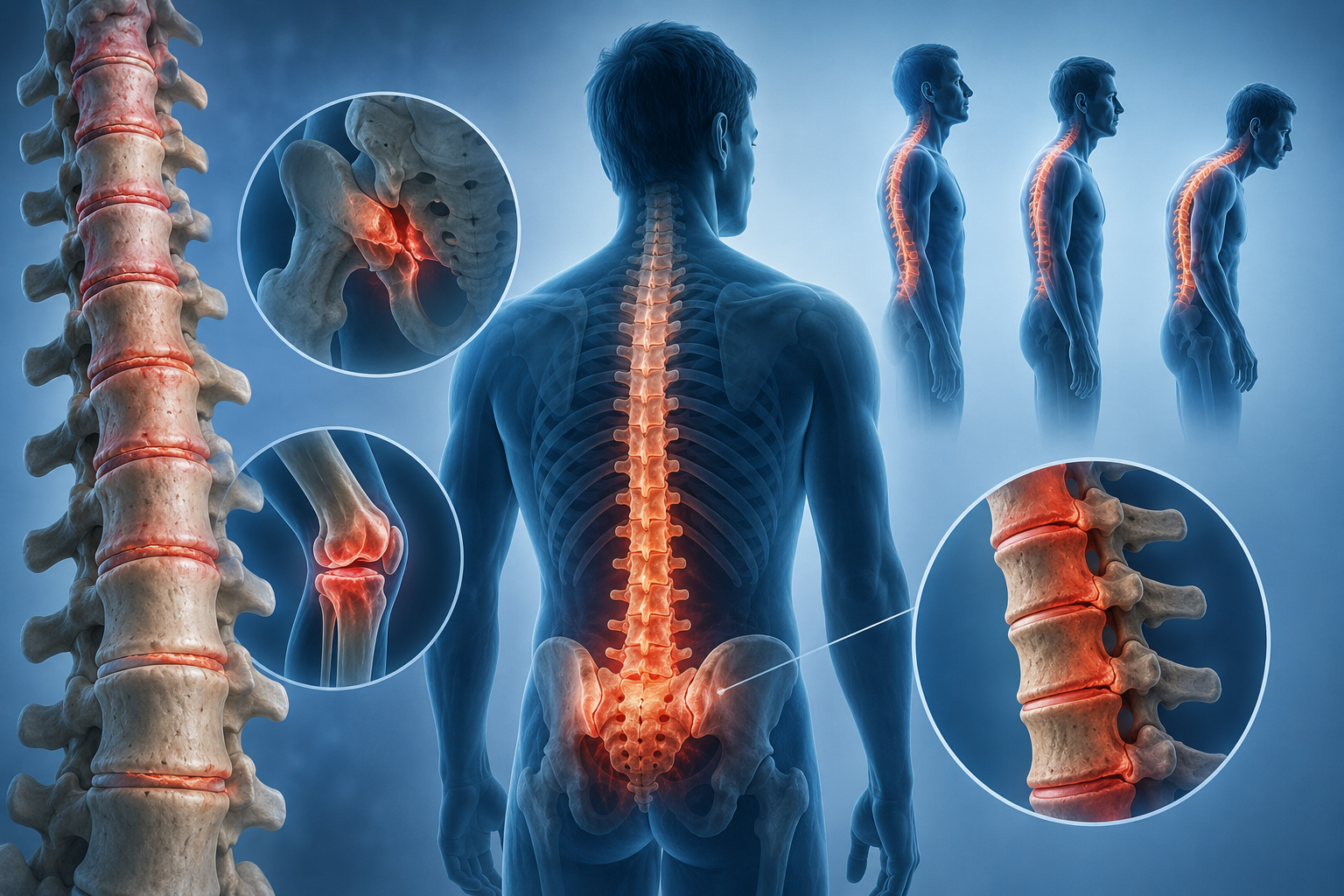
Ankylosing spondylitis (AS), also known as Bechterew’s disease, is a chronic inflammatory condition that primarily affects the spine and sacroiliac joints. Over time, inflammation can lead to stiffness, reduced flexibility, and limitations in daily activities.
The condition most commonly develops between the ages of 15 and 40. Early diagnosis and appropriate treatment are essential to slow disease progression and maintain a good quality of life.
What Is Ankylosing Spondylitis?
Ankylosing spondylitis belongs to a group of chronic rheumatic diseases. The inflammation associated with the condition can trigger the formation of new bone tissue between vertebrae, gradually reducing spinal flexibility and mobility.
If left unmanaged, the disease may lead to significant spinal stiffness, postural changes, and functional limitations.
Common Symptoms
In the early stages, symptoms often develop gradually and may be mistaken for muscle strain or fatigue.
The most common symptoms include:
• chronic lower back pain;
• morning stiffness lasting longer than 30 minutes;
• pain that improves with movement and exercise;
• reduced spinal mobility;
• pain in the buttocks;
• fatigue and lack of energy;
• reduced chest expansion during breathing.
Unlike mechanical back pain, symptoms of ankylosing spondylitis typically improve with physical activity and worsen during prolonged rest.
Why Is Early Diagnosis Important?
The earlier the diagnosis is made, the better the chances of slowing disease progression and preventing long-term mobility limitations.
Diagnosis may include:
• consultation with a rheumatologist;
• blood tests;
• X-ray examinations;
• magnetic resonance imaging (MRI);
• assessment of spinal mobility.
Early treatment can help preserve function and reduce the risk of complications.
The Role of Physiotherapy in Ankylosing Spondylitis
Physiotherapy is one of the most important components of treatment and rehabilitation for people with ankylosing spondylitis.
The main goals of physiotherapy are:
• maintaining spinal mobility;
• improving posture;
• increasing joint flexibility;
• reducing pain;
• strengthening the back and core muscles;
• improving breathing capacity.
Regular physiotherapy can help individuals remain independent and physically active for longer.
How Can Kinesitherapy Help?
At the Dr. Bubnovsky Center in Riga, kinesitherapy—treatment through movement—is an essential part of rehabilitation.
An individually tailored exercise program helps:
• reduce muscle tension;
• improve spinal flexibility;
• strengthen deep stabilizing muscles;
• enhance movement coordination;
• maintain joint function;
• improve overall physical endurance.
Regular and properly supervised exercise is one of the most effective ways to preserve mobility and improve long-term well-being.
Lifestyle Recommendations for Ankylosing Spondylitis
In addition to medical treatment, lifestyle habits play a major role in managing symptoms and maintaining function.
Specialists recommend:
• engaging in regular physical activity;
• avoiding prolonged sitting;
• maintaining good posture;
• keeping a healthy body weight;
• quitting smoking;
• following medical and physiotherapy recommendations.
Movement is one of the most powerful tools for controlling symptoms and preserving spinal function.
Why Choose the Dr. Bubnovsky Center in Riga?
The specialists at the Dr. Bubnovsky Center develop individualized physiotherapy and kinesitherapy programs for people living with chronic spinal conditions.
Patients benefit from:
• comprehensive functional assessments;
• personalized rehabilitation plans;
• professional supervision by experienced specialists;
• modern physiotherapy and kinesitherapy methods;
• guidance for maintaining long-term results.
The goal is not only to reduce symptoms but also to help patients maintain an active and fulfilling lifestyle.
Book a Consultation
If you experience chronic back pain, morning stiffness, or reduced spinal mobility, do not ignore the symptoms.
Book a consultation at the Dr. Bubnovsky Center in Riga and receive a personalized physiotherapy and kinesitherapy program designed to support spinal health, improve mobility, and enhance your quality of life.
Ankylosing spondylitis (AS), also known as Bechterew’s disease, is a chronic inflammatory condition that primarily affects the spine and sacroiliac joints. Over time, inflammation can lead to stiffness, reduced flexibility, and limitations in daily activities.
The condition most commonly develops between the ages of 15 and 40. Early diagnosis and appropriate treatment are essential to slow disease progression and maintain a good quality of life.
What Is Ankylosing Spondylitis?
Ankylosing spondylitis belongs to a group of chronic rheumatic diseases. The inflammation associated with the condition can trigger the formation of new bone tissue between vertebrae, gradually reducing spinal flexibility and mobility.
If left unmanaged, the disease may lead to significant spinal stiffness, postural changes, and functional limitations.
Common Symptoms
In the early stages, symptoms often develop gradually and may be mistaken for muscle strain or fatigue.
The most common symptoms include:
• chronic lower back pain;
• morning stiffness lasting longer than 30 minutes;
• pain that improves with movement and exercise;
• reduced spinal mobility;
• pain in the buttocks;
• fatigue and lack of energy;
• reduced chest expansion during breathing.
Unlike mechanical back pain, symptoms of ankylosing spondylitis typically improve with physical activity and worsen during prolonged rest.
Why Is Early Diagnosis Important?
The earlier the diagnosis is made, the better the chances of slowing disease progression and preventing long-term mobility limitations.
Diagnosis may include:
• consultation with a rheumatologist;
• blood tests;
• X-ray examinations;
• magnetic resonance imaging (MRI);
• assessment of spinal mobility.
Early treatment can help preserve function and reduce the risk of complications.
The Role of Physiotherapy in Ankylosing Spondylitis
Physiotherapy is one of the most important components of treatment and rehabilitation for people with ankylosing spondylitis.
The main goals of physiotherapy are:
• maintaining spinal mobility;
• improving posture;
• increasing joint flexibility;
• reducing pain;
• strengthening the back and core muscles;
• improving breathing capacity.
Regular physiotherapy can help individuals remain independent and physically active for longer.
How Can Kinesitherapy Help?
At the Dr. Bubnovsky Center in Riga, kinesitherapy—treatment through movement—is an essential part of rehabilitation.
An individually tailored exercise program helps:
• reduce muscle tension;
• improve spinal flexibility;
• strengthen deep stabilizing muscles;
• enhance movement coordination;
• maintain joint function;
• improve overall physical endurance.
Regular and properly supervised exercise is one of the most effective ways to preserve mobility and improve long-term well-being.
Lifestyle Recommendations for Ankylosing Spondylitis
In addition to medical treatment, lifestyle habits play a major role in managing symptoms and maintaining function.
Specialists recommend:
• engaging in regular physical activity;
• avoiding prolonged sitting;
• maintaining good posture;
• keeping a healthy body weight;
• quitting smoking;
• following medical and physiotherapy recommendations.
Movement is one of the most powerful tools for controlling symptoms and preserving spinal function.
Why Choose the Dr. Bubnovsky Center in Riga?
The specialists at the Dr. Bubnovsky Center develop individualized physiotherapy and kinesitherapy programs for people living with chronic spinal conditions.
Patients benefit from:
• comprehensive functional assessments;
• personalized rehabilitation plans;
• professional supervision by experienced specialists;
• modern physiotherapy and kinesitherapy methods;
• guidance for maintaining long-term results.
The goal is not only to reduce symptoms but also to help patients maintain an active and fulfilling lifestyle.
Book a Consultation
If you experience chronic back pain, morning stiffness, or reduced spinal mobility, do not ignore the symptoms.
Book a consultation at the Dr. Bubnovsky Center in Riga and receive a personalized physiotherapy and kinesitherapy program designed to support spinal health, improve mobility, and enhance your quality of life.